The $8 Million LASIK Error (*and How HR Is Related)
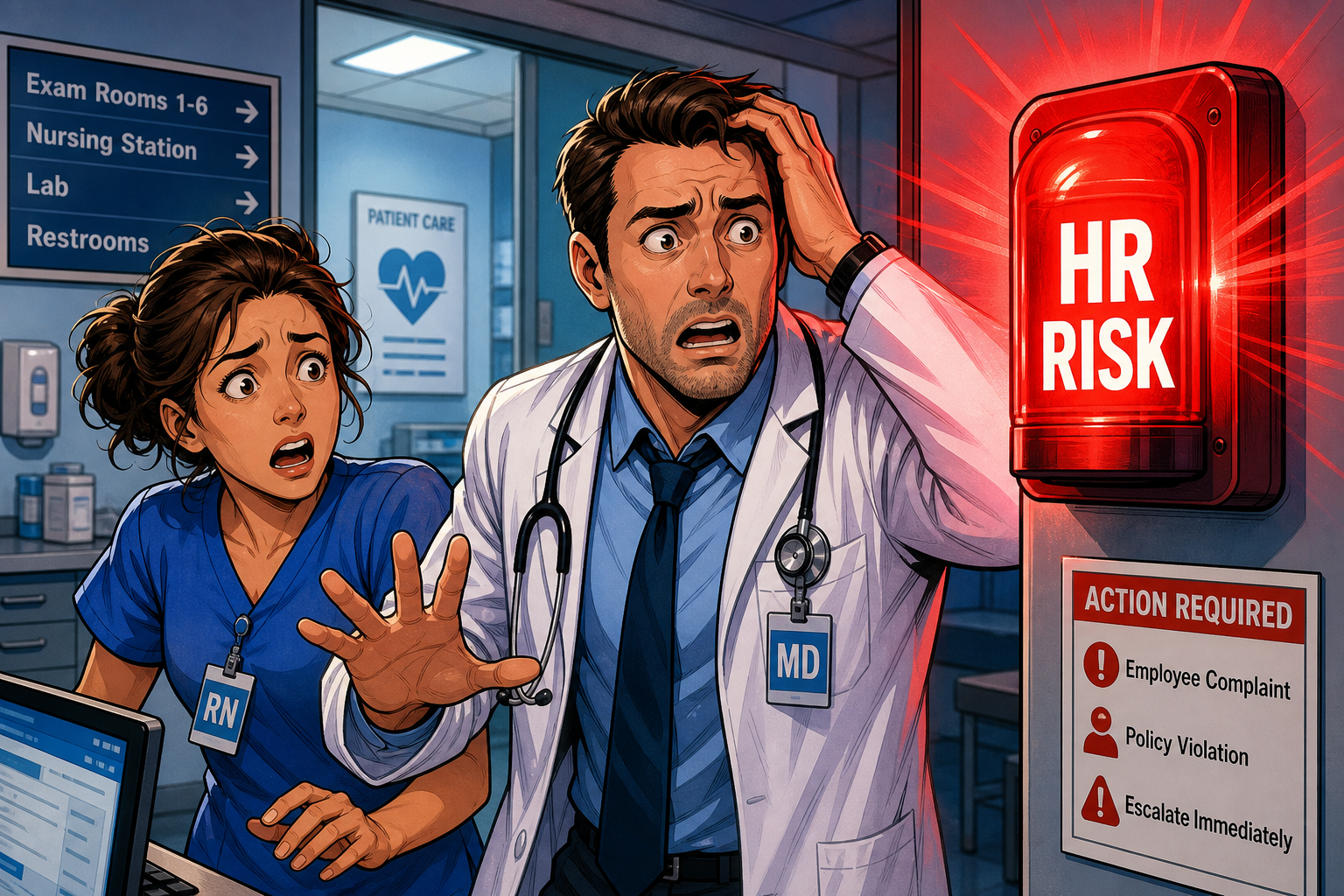
Do you have an HR alarm going off in your practice?
In ophthalmology, cutting corners can have consequences that are immediate, visible, and devastating. When a clinic rushes the process, skips safeguards, or weakens training, the outcome can be life-altering for a patient and financially damaging for the business.
Earlier in 2026, a clinic suffered an $8 million judgment in a medical malpractice case arising from elective LASIK surgery that resulted in permanent vision damage. The clinic had cut corners in its pre-operative diagnostic process and overlooked signs of keratoconus, which led to post-LASIK ectasia in the plaintiff’s case.
The same lesson applies inside your practice in a quieter way: when organizations cut corners in HR, the damage may not make headlines, yet it can still erode performance, increase turnover, and put the entire clinic at risk.
The parallel is easy to see. If a clinic ignores overtime rules, fails to pay for required travel time, underinvests in leadership, or neglects its best staff members, it creates risk that may not surface until a valued employee walks out the door or a wage-and-hour lawsuit appears. In both clinical care and HR, shortcuts may feel efficient in the moment, but they often create much larger problems later.
The Hidden Cost of People Risk
Patient harm gets attention because it is visible. People risk is often more dangerous because it is harder to measure until the loss is already baked in. Disengaged employees do not always complain loudly; they quietly disconnect, stop solving problems, and eventually leave.
On the other hand, businesses with highly engaged employees consistently outperform those with low engagement, which means engagement is not a “nice to have” — it is a business driver.
Turnover is expensive even before you count the disruption to patients and providers. Replacing one employee can easily cost around $25,000 or more when you factor in recruiting, training, lost productivity, and the strain placed on the rest of the team. In a specialized ophthalmology environment, those costs can be even higher because coordination matters, training takes time, and patient flow depends on experienced staff.
What Cutting Corners Looks Like in HR
In a clinic, HR shortcuts often look harmless in the moment. Someone works through lunch and is told to “just keep track of it mentally.” A technician drives to another site and no one is sure whether travel time is compensable. A new manager gets promoted because she is a great clinician, but no one gives her real leadership training. Staff members perform well for months without hearing a single specific thank-you.
Each of those choices can become a liability. Wage-and-hour mistakes can trigger complaints, back pay, and penalties. Poorly trained supervisors can create inconsistent discipline, morale problems, and avoidable turnover. A workplace that withholds recognition eventually teaches employees that extra effort will not be noticed. In that environment, the best people often do not leave because they are unhappy with the work itself; they leave because the organization feels indifferent to them.
That is the HR equivalent of skipping a careful pre-op review. The clinic may keep moving, but the system becomes more fragile with every shortcut.
Why Ophthalmology Is Especially Exposed
Ophthalmology practices are built on precision, trust, and consistency. Patients expect technical skill, but they also expect seamless service from front desk to technician to billing team. When staffing is unstable, the patient experience suffers first, followed by provider stress, then financial pressure. A clinic can have excellent clinical talent and still struggle if the people systems are weak.
That is why HR compliance is not separate from patient care. It supports it. If your practice loses experienced people too often, the remaining team has less time to focus on accuracy, service, and safety. If your supervisors are not trained well, small mistakes can become culture problems. And if your employees feel underpaid for the hours they actually work, resentment builds long before a formal complaint is filed.
Practical Ways to Reduce Risk
There are straightforward ways to lower both turnover and compliance exposure in an ophthalmology clinic:
Audit overtime, meal periods, and travel-time practices regularly to make sure pay rules are being followed consistently.
Train managers on how to schedule, approve time, document performance, and handle concerns before problems escalate.
Build a real recognition habit, because praise and appreciation are not fluff; they are retention tools.
Invest in leadership development for supervisors, lead technicians, and other key staff.
Track turnover by department, role, and manager so you can spot patterns early.
Improve onboarding so new hires understand expectations, workflows, and compliance basics from day one.
Review job descriptions, classification decisions, and pay practices to reduce wage-and-hour mistakes.
Small improvements in these areas can create large gains in stability. They also help employees feel seen, supported, and more likely to stay.
The Business Case
The strongest argument for HR compliance is not fear; it is performance. Engaged teams produce better results, and practices with stronger cultures generally operate more efficiently, deliver better service, and keep good people longer. In a clinic where every role matters, even one departure can ripple through patient scheduling, surgical coordination, and revenue cycle efficiency.
That is why the cost of “almost compliant” is often much higher than the cost of doing it right. The same discipline that protects patients should protect employees. Both require attention, policy, training, and follow-through.
Conclusion
The lesson is simple: cutting corners may save time today, but it can cost far more tomorrow in turnover, disengagement, legal exposure, and lost operational strength. The clinics that win long term are the ones that treat people systems with the same seriousness they bring to clinical systems.
If you want to reduce HR risk in your ophthalmology practice, start with the basics: pay correctly, train leaders well, recognize good work, and watch your culture as closely as you watch your margins. Reach out if you want help retaining staff and staying HR compliant.
Subscribe for Ophthalmology Leadership Insights
Subscribe for 1-2x per month emails focused on ophthalmology and healthcare! Get updates on :
HR law
Best practices for eye care practices
Updates from leaders in the eye care industry who are featured on our podcast, Eye Care Leadership Live
