Managing Gen Z in Ophthalmology: Tips I Learned from Luke Goetting
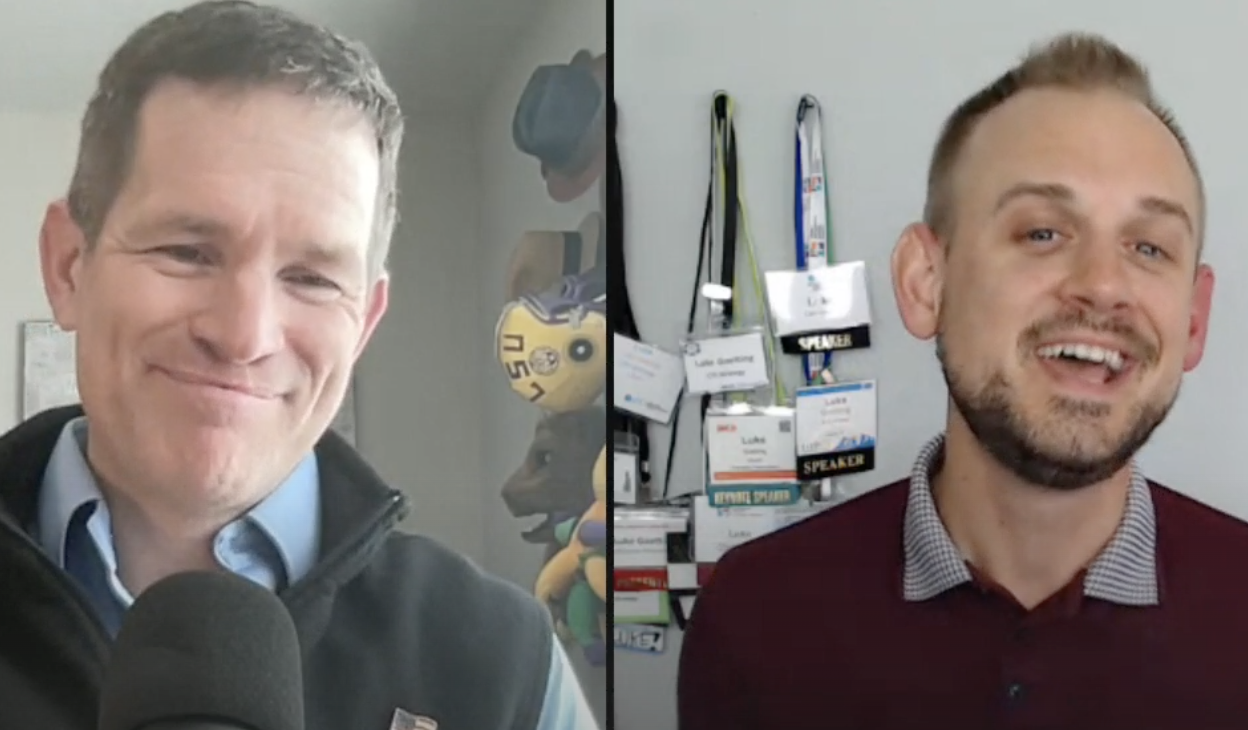
Luke was a fountain of information for today’s eye care leader.

“Why doesn’t Gen Z want to work hard?”
“Why won’t my 20-something employees show up for work?”
“Don’t they care?”
These are some sentiments that I hear more and more from frustrated ophthalmology leaders.
Gen Z is already the backbone of many eye care teams—and after my conversation with generational expert Luke Goetting, I’m more convinced than ever that our leadership has to catch up. Gen Z isn’t “the problem;” they are telling us exactly how to build stronger clinics, if we’re willing to listen.
Rethinking Generations: Why Gen Z Feels Different
For years I dismissed “generational talk” as fluffy theory, but Luke reframed it in a way that really clicked for me as an eye care HR practitioner. It’s not that Gen Z has alien values; it’s that they grew up in a completely different context—always online, always connected, with instant answers at their fingertips.
Here’s what stood out for me:
Digital native mindset: Gen Z has never known a world without the internet, smartphones, and on‑demand information, so opaque, “need‑to‑know” management feels abnormal and frustrating to them.
Speed and options: They constantly “recalculate” whether their current role is worth staying in—often every 3–6 months—because it’s easier than ever to find new roles, gigs, or freelance opportunities.
Majority of your workforce: Millennials and Gen Z together now represent well over half of the workforce, so understanding them is no longer optional for healthcare staff retention.
Here’s how you can respond as an eye care leader:
Map this to your own clinic: Ask yourself, “If I grew up with instant answers and constant feedback, how would our current policies, communication style, and performance reviews feel to me?” Use that as a lens to audit your HR practices.
Stop moralizing churn: Instead of “kids don’t want to work,” assume they want to grow and contribute—and design roles, feedback, and development around that assumption.
Treat retention as a strategic metric: Track early‑tenure turnover (0–18 months) and exit reasons, and review that data quarterly with your leadership team to adjust how you recruit, onboard, and manage Gen Z staff.
If you don’t have the bandwidth to analyze these patterns, this is exactly the kind of review a fractional HR partner can run with you so you get clear, actionable data instead of relying on gut feelings.
Takeaway 1: Make Growth Visible, Not Vague
Luke shared a story that really stuck with me: his Gen Z cousin actively evaluates his job every few months, asking, “How much am I learning here compared to my alternatives?” That mindset is now common, and healthcare is not immune. If a technician doesn’t see tangible growth, they assume they need to move on to grow.
Eye care actually offers rich growth paths—new diagnostic tests, imaging, surgical workflows, patient education, and mentoring—but most clinics never show that path clearly.
Here’s how you can make growth real in your practice:
Build simple skill paths for each role: Define 3–5 core skills for positions like tech, scribe, front desk, and optician, and rate current proficiency together (for example, 1–5 scale). Then agree on 1–2 specific skills to move up a level over the next six months.
Tie skills to micro‑milestones, not just titles: Instead of only “tech” vs. “senior tech,” define mini-badges such as “OCT proficient,” “visual field expert,” or “surgical counseling lead,” and connect them to small pay bumps or recognition.
Use 20% “development time”: Consider implementing one half‑day every couple of weeks where staff step out of routine patient flow to refine workflows, update scripts, learn a new device, or work on patient experience projects. This can mirror the “20% time” concept Luke described and is strongly aligned with Gen Z’s desire for skills development.
This is also where a structured HR approach helps. When I work with practices, we often start by turning fuzzy growth promises into clear competency maps and development plans, so staff and managers are aligned on what “progress” looks like in concrete terms.
Takeaway 2: Gamify Learning and Recognition
Gen Z grew up with levels, points, and badges—in apps, games, and even school platforms—so visual, game‑like progress tracking feels normal, not childish. Luke’s point wasn’t “turn your clinic into a video game;” it was “make progress visible, frequent, and rewarding.”
Thoughtful gamification can significantly increase engagement and completion of key tasks. That’s exactly what many clinics need to reduce healthcare turnover and improve employee engagement in clinics.
Consider implementing:
Skill badges with dashboards: Create a simple shared tracker (even a slide or spreadsheet) showing who has mastered which devices, procedures, or workflows, and update it in real time. Use it in 1:1s and team meetings so people see movement.
Friendly competitions around quality metrics: For example, money collected, oustanding AR, or documentation accuracy, and celebrate weekly “wins” with shout‑outs, preferred parking, or small rewards.
Micro‑credentials and CE support: Offer partial reimbursement or time off for relevant certifications, then highlight those achievements in internal communications so Gen Z staff see their skills portfolio growing—not just their years of service.
If you’re unsure how to design rewards that motivate without breaking your budget or violating HR compliance for medical practices, a strategic HR partner can help you build a fair, compliant structure that still feels dynamic and motivating.
Takeaway 3: Shift From Command‑and‑Control to Co‑Creation (Luke’s “Two‑Thirds Rule”)
One of my favorite concepts from Luke was his “two‑thirds rule.” Leaders don’t have to hand over the keys to the clinic—but they also can’t expect buy‑in if every decision is fully baked before staff ever see it.
He suggests leaders bring about two‑thirds of the plan (direction, constraints, goals), and intentionally leave one‑third open for staff input. That’s especially important for digital natives who expect their voice to matter and are used to interactive, two‑way experiences.
Here’s how you can apply this in an eye care setting:
Co‑design workflows that staff live with: Before you roll out a new clinic flow, EHR change, or policy, run a short session with front‑line staff and ask, “What’s missing? What will break? What would make this easier for you and our patients?” Incorporate a few of their suggestions and explicitly acknowledge them.
Host “brain date” sessions: Borrowing from Luke’s workshops, schedule quarterly 60‑minute sessions where mixed‑role, mixed‑generation small groups tackle questions like “How can we reduce patient wait times?” or “How can we improve same‑day conversion?” Rotate tables every 15 minutes to cross‑pollinate ideas.
Involve Gen Z in patient communication design: Younger staff often have better instincts about what will resonate on text, social, and digital channels. Ask them to propose scripts, social content, or reminder flows—and test their ideas in a small pilot.
These approaches do more than boost employee engagement in clinics—they also improve business outcomes. Staff who feel heard are more loyal, more creative, and far more likely to help you implement change instead of quietly resisting it.
Takeaway 4: Lead With Transparency, Coaching, and Purpose
Across Luke’s real‑world experience, three themes show up over and over for Gen Z: transparency, coaching‑style leadership, and meaningful work. In a high‑pressure, margin‑squeezed healthcare environment, those can feel like luxuries—but they’re actually core retention drivers.
Here’s how you can bring that into your practice:
Make expectations and pathways explicit: Clarify how performance is evaluated, how raises are decided, and what it takes to move from novice to expert in a role. Even simple one‑page role scorecards can dramatically reduce anxiety and build trust.
Shift from annual reviews to frequent check‑ins: Gen Z values ongoing feedback, not just yearly verdicts. Consider 15–20 minute monthly 1:1s focused on three questions: “What’s working? What’s frustrating? What do you want to learn next?”
Connect daily work to a bigger “why”: Eye care has a powerful built‑in purpose—protecting vision, preserving independence, improving quality of life. Regularly share patient stories and outcomes in staff meetings so team members see the impact of their work, not just the volume.
Many owners and administrators intend to do these things but never get around to building a repeatable structure. This is where partnering with someone who lives and breathes HR challenges in healthcare can help turn good intentions into consistent systems that actually reduce healthcare turnover.
Bringing It Home: You Don’t Have to Do This Alone
My conversation with Luke reinforced something I see every day in HR for medical practices: your younger workforce is not asking for beanbags and free lattes—they’re asking for clarity, growth, a voice, and work that matters. Those are the same things most owners want for themselves; we just need to translate them into concrete practices for our teams.
For a deeper dive into how these principles can support your hiring, onboarding, management, and healthcare staff retention strategy, you’re welcome to explore my HR services for eye care leaders here.
Get the Guide to Staff Retention in Healthcare
Losing just one hourly employee costs your business about $25k… in replacement costs, training time, and lost productivity. Not to mention your own frustration.
My guide to employee retention will cover the tips and behaviors that I’ve learned from 20 years in healthcare and other industries. Topics include:
The psychology of retention
How to measure retention
Hiring effectively
Onboarding tips
