Addressing Front Desk Burnout in Healthcare
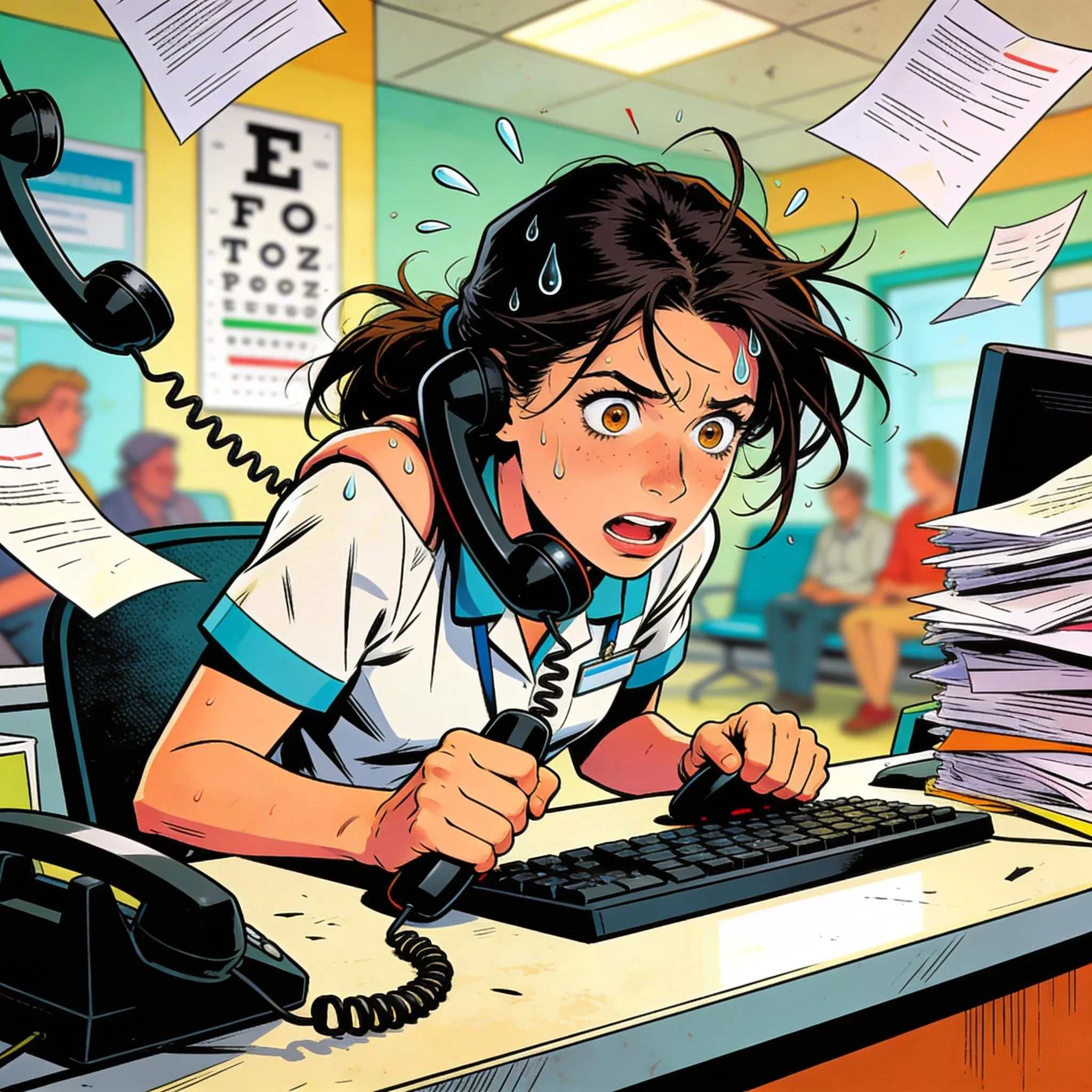
Is your eye care front desk burned out? You aren’t alone…

In the world of ophthalmology and clinical healthcare, we often talk about physician burnout and nurse fatigue. But there is a silent crisis brewing at the very first point of contact in your clinic: the medical front desk. Your receptionists are the "face" of your practice, the air traffic controllers of your schedule, and the shock absorbers for every frustrated patient.
When that shock absorber wears thin, the entire practice feels the rattle. High turnover at the front desk isn't just an HR headache; it’s a leak in your revenue bucket and a direct threat to patient satisfaction. Drawing from the core principles of Seasoned Advice, let’s explore how to identify, respond to, and ultimately prevent medical front desk burnout.
The Warning Signs: Is Your Team "Checked Out"?
Burnout doesn't happen overnight; it’s a slow erosion. At Seasoned Advice, we emphasize that "hiring the wrong person" is a major driver of turnover, but even the best hires will burn out if the environment is toxic or stagnant.
Look for these red flags:
The "Cynicism Shift": A once-friendly staff member starts making sarcastic comments about patients or the "system."
Declining Efficiency: Small tasks like insurance verification or answering emails start taking twice as long.
Isolation: A team member who used to engage in office banter now retreats to their desk or avoids staff meetings.
The "Revolving Door" Symptom: If you find yourself constantly hiring for the same role, the problem isn’t the candidates—it’s the role itself.
Why Does Burnout Happen at the Front Desk?
The front desk team in an eye care clinic has multiple challenges making it highly prone to burnout:
Catchall Effect: The front desk receives inbound calls, faxes, and emails. In addition they are the first go-to resource for patients with questions and gripes. And lastly, the clinical staff often complain and needle the front desk for administrative delays or errors. Even the call center or billing departments can harass the front desk about procedural issues or pepper them with questions — often while they are in mid-conversation with an angry patient.
Insurance Stress: As insurance coverage becomes more and more frustrating, the front desk is the first line of the battle front. Patients often direct their anger and confusion at the nearest person — the receptionist.
Lack of Appreciation: Doctors and supervisors put most of their focus on the clinical staff. Physicians work most closely with technicians and medical assistants, and so the front desk becomes invisible to providers. Supervisors are often busy resolving insurance or operational issues in the clinic, so the front desk doesn’t get it’s share of attention from them, either.
All of this has the result of putting more stress — and less relief — onto your front desk team.
Phase 1: Prevention Through Hiring
The most effective way to stop burnout is to prevent it before the first day of work. A common mistake practice administrators make is hiring for "friendliness" alone. While a smile is great, a front desk professional without efficiency is a recipe for stress.
Patients don’t just want a "chatty" receptionist; they want a professional who can navigate the EMR, handle three phone lines, and verify insurance without breaking a sweat. When you hire for organizational stamina and technical aptitude, you set the employee up for success rather than a constant state of "playing catch-up."
Phase 2: Improving Mindset and Boosting Morale
If burnout has already set in, you can’t just "pizza party" your way out of it. You need a shift in organizational mindset.
Cultivate "Discretionary Effort": As we discuss at Seasoned Advice, motivation comes when employees feel their work is a "calling," not just a job. Connect their daily tasks to patient outcomes. Remind them that a smooth check-in process reduces a patient’s anxiety before they even see the doctor.
Radical Transparency and Feedback: Stop the "gossip culture" by being open about the practice’s goals. Hold "trenches" meetings where you ask the front desk, "What is the one thing that made your day miserable yesterday?" Then, actually fix it.
Be Present: Spend time observing and working alongside your front desk team. This shows them that you are willing to help and understand their realities.
Specific Praise: A generic "good job" is white noise. Try: "I noticed how you handled that billing dispute with Mr. Smith; you stayed calm and kept the lobby quiet. Thank you." This makes a staff member feel seen as an individual, not just a cog in the machine.
Phase 3: Leveraging Technology and AI (The Great Offloader)
One of the primary causes of burnout is the "mundane task" pile-up. Humans are not meant to spend eight hours a day repeating the same phone script or fighting with a printer.
AI and Automation: Implement AI-driven tools for appointment reminders and online scheduling. If a patient can book their own follow-up at 10 PM on a Sunday, that’s one less phone call your staff has to handle during the Monday morning rush.
Digital Intake Forms: Stop the "germ-filled clipboard" cycle. Having patients fill out forms via a secure link before they arrive saves your staff hours of manual data entry and reduces errors caused by illegible handwriting.
Two-Way Texting: Allow patients to text the office for simple questions. It’s faster for the staff to type a quick reply than to get stuck in a 5-minute phone conversation about office hours.
Phase 4: Strategic Response to Active Burnout
When an employee is struggling, the response must be empathetic and structural:
Encourage "Unplugging": Americans are notoriously bad at taking vacations. At Seasoned Advice, we recommend enabling time off with adequate PTO. A weekend is a band-aid; a full week away from the phones is a reset button.
The "Waterfall" of Responsibility: Paradoxically, giving staff more meaningful responsibility (like leading a new project or training a peer) can actually reduce burnout. It replaces "monotony" with "mastery." Purpose creates more job engagement and retention.
Professional Development: Invest in your team. Send them to a conference or pay for a certification. When an employee sees a path upward, the daily grind feels like a step toward a goal rather than a dead end.
Bonus - for burnout tips from our Eye Care Leadership Live podcast, visit this conversation on burnout in healthcare with Patrick Rieke.
The Bottom Line: People-First Healthcare
At the end of the day, your front desk team will treat your patients exactly how you treat them. If they feel undervalued, overworked, and ignored, your patients will feel that tension from the moment they walk in.
By auditing your workflows, leveraging modern AI tools to remove the "grunt work," and fostering a culture of genuine appreciation, you don't just reduce burnout—you create a "destination workplace." A practice where the front desk is energized is a practice that thrives, grows, and provides the highest level of care.
Want to dive deeper into optimizing your medical practice’s HR? Visit our HR Consulting services to learn how we help ophthalmology and healthcare leaders get better results through people.
Subscribe for Ophthalmology HR Insights
Complete the form and immediately get ALL of my free downloadable resources.
Make sure you check SIGN UP FOR NEWS AND UPDATES
