PIP Tips: Writing Performance Plans in Ophthalmology
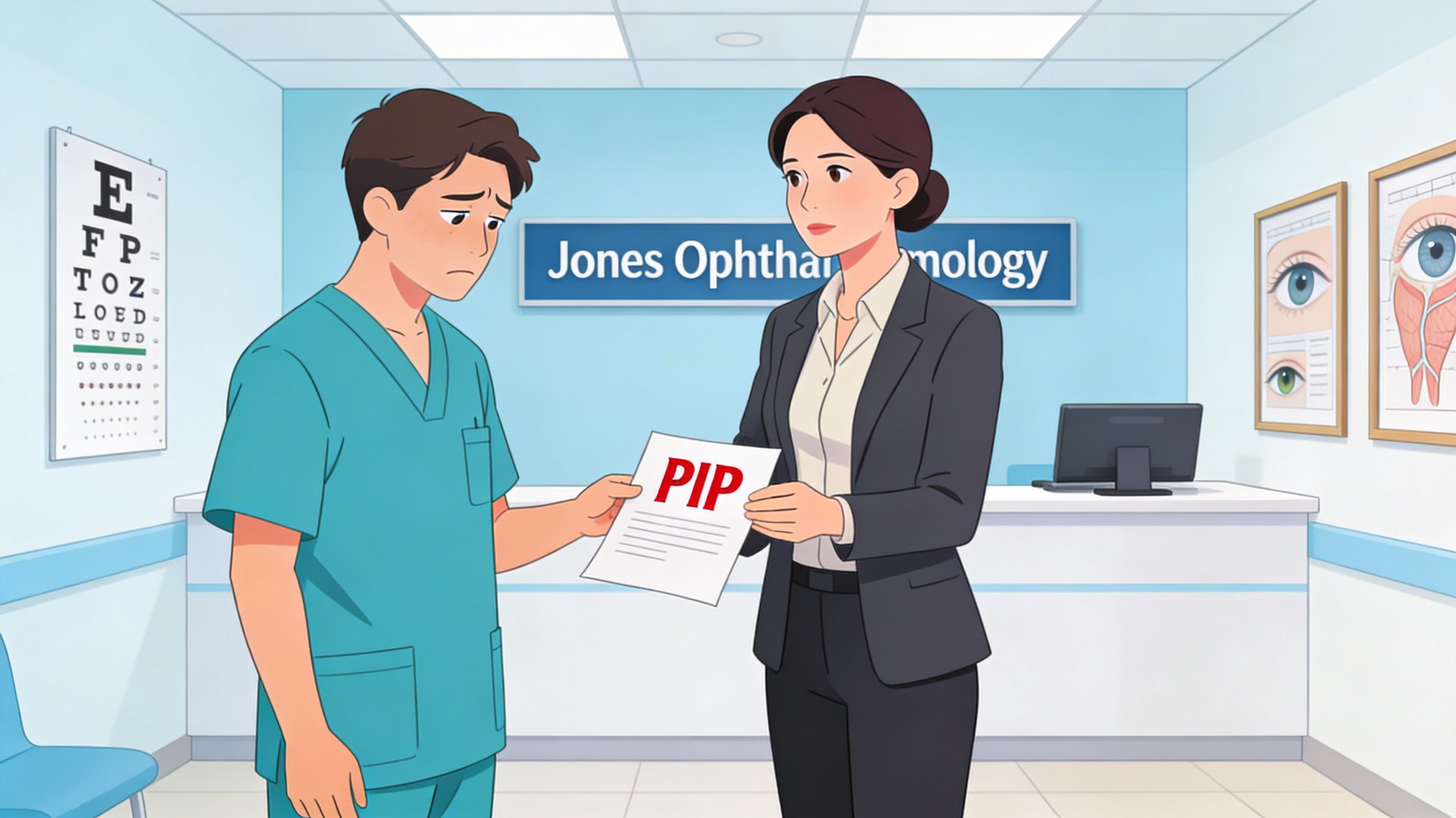
Putting an employee on a PIP sends a powerful message, but use it with caution.

As a practice manager or clinic owner, your day is a whirlwind of patient schedules, insurance billing, and regulatory compliance. When an employee isn't meeting expectations, it feels like a heavy weight on an already exhausted team. You might think your only options are to ignore the problem or head straight for a termination.
However, there is a middle ground that—when used correctly—can actually reduce ophthalmology turnover and strengthen your clinic’s culture: The Performance Improvement Plan (PIP).
Many people view a PIP as the "kiss of death" or a "pre-firing notice." But in a high-stakes medical environment, a PIP is actually a roadmap. It provides the clarity and structure needed to bring a team member back to the high standards your patients deserve.
When Should You Actually Use a PIP?
A common mistake in HR compliance for ophthalmology practices is using a PIP for every little thing. If a front-desk staff member is consistently ten minutes late, you don't need a complex plan; you need a clear conversation about attendance policy.
PIPs are best reserved for complex performance issues that require time and effort to fix. This might include a medical biller struggling with coding accuracy or a nurse who is failing to follow new clinical protocols.
Using PIPs for More Than Just "Firing"
Believe it or not, PIPs can be used for your "stars" too. If a high-performer is struggling to transition into a lead role, a structured plan can help them bridge that gap. If you only use PIPs to fire people, your staff will learn to fear them. If you use them to improve employee performance in clinics, they become a tool for growth.
Audit your intent: Before issuing a PIP, ask yourself: "If this person met every goal in this document, would I be happy to keep them?" If the answer is no, a PIP isn't the right tool—a separation agreement might be.
Check the history: Ensure you have already had 1-2 documented verbal or written warnings. Springing a PIP on someone without warning is the fastest way to destroy trust and increase your legal risk.
HOT TIP: Want my PIP Template? Get it in the Free Downloads section of the site!
Writing a PIP That Actually Works
The secret to a successful PIP is specificity. Vague goals like "be a better team player" or "improve attention to detail" are impossible to measure. In a medical setting, being vague can lead to confusion and even more errors.
1. Describe the Gap
Don't just say the performance is "bad." Use behavioral and result-based terms.
Instead of: "You're slow at rooming patients."
Try: "Current data shows an average of 20 minutes to room a patient; the clinic standard is 10 minutes to maintain the daily schedule."
2. Set Measurable Goals and Tasks
Your goals should be "SMART" (Specific, Measurable, Achievable, Relevant, and Time-bound). Some examples:
“Submit to me a weekly summary of performance logs for billing staff that includes number of claims submitted and value of claims with over 90 days in AR.”
"Complete all patient charts before leaving at the end of the shift."
3. Lay Out the Roadmap
A PIP should include the specific steps the employee needs to take and what the practice will do to support them. Do they need more training on the EMR system? Do they need a mentor?
Clearly define the timeline: Most PIPs last 30, 60, or 90 days.
State the consequences: It must be clear that failure to meet these goals may lead to further disciplinary action, up to and including termination.
The #1 Mistake: The "Set It and Forget It" PIP
The most common error that dooms a PIP—and creates legal headaches for your clinic—is failing to follow up. If you give an employee a 60-day plan but don't talk to them until day 59, you haven't given them a chance to succeed. You’ve just documented your own failure to be supportive and the employee’s failure to succeed — not good.
Regular check-ins are the heartbeat of ophthalmology staff retention and they make or break a PIP’s success. They prove that you are invested in the employee's success.
Hit your deadlines: If the PIP says you will meet every Tuesday at 8:00 AM, do not cancel those meetings. Consistency shows the employee (and a lawyer, if it ever comes to that) that you took the process seriously.
Document the "In-Between": During check-ins, write down what was discussed. Is the employee trying? Are they improving? If they show zero effort, you may be able to accelerate the timeline, but you should consult with an HR expert before doing so to ensure you aren't skipping vital steps.
Navigating the Path Forward
Managing people is often harder than managing patients. The complexities of HR challenges in ophthalmology can feel overwhelming when you’re also trying to run a profitable business. You don't have to navigate these difficult staff transitions alone.
Whether you need help drafting your first formal PIP or want to reduce eye care turnover through a better engagement strategy, a strategic HR partner can make all the difference. Consider how a fractional HR expert could lighten your load, allowing you to focus on patient care while knowing your team is handled with professional precision.
Learn more about our Fractional HR Services for Ophthalmic Practices here.
Get a FREE PIP Template - And More
Complete the form and immediately get ALL of my free downloadable resources, including my PIP template.
BONUS - Subscribers who sign up for news and updates will get a biweekly newsletter with HR updates, leadership tips, and more.
To get it - sign up now!
